
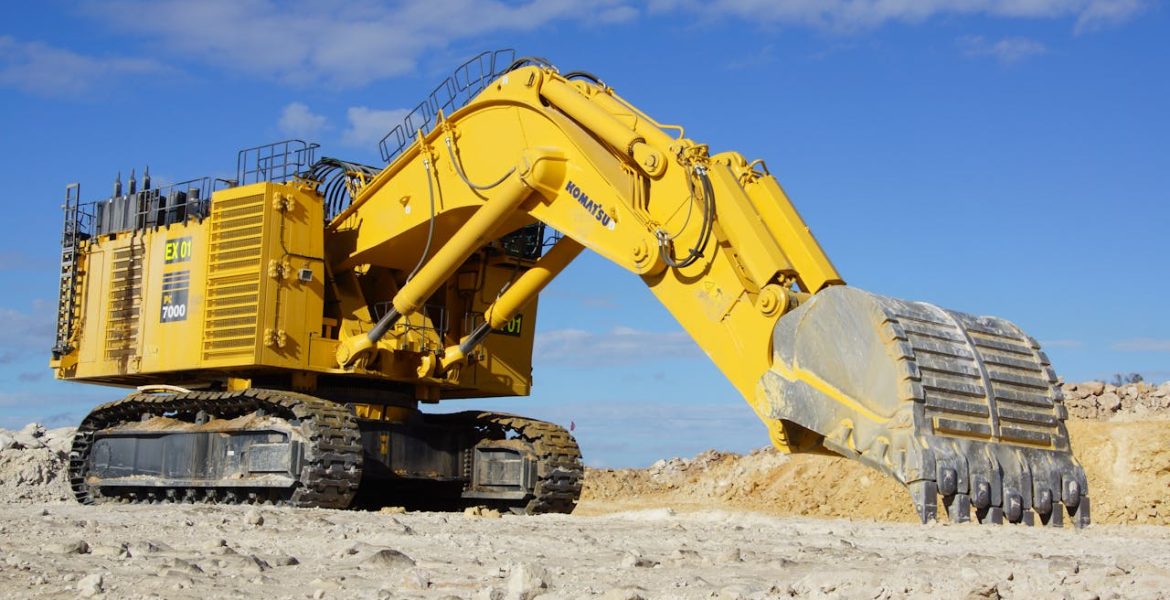
Choosing from the many types of excavators on the market is one of the most important equipment decisions you will make on a project. Pick the right machine and the work flows smoothly.
Pick the wrong one and you deal with wasted fuel, lost productivity, and a machine that either cannot reach deep enough or takes up too much space on the jobsite. Every excavator style is built for a specific range of tasks, and understanding those strengths before you buy or rent saves time and money.
This guide covers the main types of excavators, explains what each one does best, and helps you match the right machine to your next project.
Standard Crawler Excavators
The standard crawler excavator is the machine most people picture when they hear the word excavator. It rides on steel tracks, rotates 360 degrees on a slew ring, and uses a boom, stick, and bucket to dig, load, and grade. These machines range from roughly 15 to 45 tons and handle the widest variety of jobsite tasks.
Crawlers dominate general construction, site preparation, foundation work, utility trenching, and truck loading. The steel tracks provide strong traction on loose or muddy ground, and the wide undercarriage keeps the machine stable during heavy digging and lifting. Among all types of excavators, the standard crawler is the most versatile and the most widely used worldwide.
The tradeoff is mobility. Crawlers cannot travel on public roads and must be loaded onto a trailer for transport between jobsites. They also move slowly on site, typically under one kilometer per hour. For projects where the machine stays in one location for extended periods, this is rarely a problem.
Understanding how the excavator final drives power those steel tracks helps you appreciate why regular gear oil checks and undercarriage maintenance matter so much on crawlers.
Mini and Compact Excavators
Mini excavators weigh under 10 tons and compact models generally fall between 1 and 6 tons. These are the types of excavators you see in residential neighborhoods, tight urban lots, indoor demolition projects, and landscaping work. Their small footprint lets them operate in spaces where a standard crawler would not fit.
Despite their size, minis use the same hydraulic principles as larger machines. They dig trenches, install utilities, grade yards, and load small trucks with surprising efficiency. Rubber tracks are common on compact models, which reduces ground disturbance on finished surfaces like lawns and driveways.
Many compact models feature zero or reduced tail swing, meaning the house does not extend past the track width when the machine rotates. This allows operators to work right next to walls, fences, and structures without worrying about the counterweight striking something behind them.
Keeping a mini compact excavator well maintained is essential because the smaller components are just as vulnerable to contamination and wear as those on larger machines. Neglect a mini and it fails just as quickly.
Wheeled Excavators
Wheeled excavators replace tracks with rubber tires, giving the machine the ability to travel on paved roads between jobsites without a trailer. Among the different types of excavators, wheeled models offer the best road mobility by far.
Travel speeds on wheeled models reach highway levels, which eliminates the cost and logistics of trailer transport. On the jobsite, outrigger stabilizers extend to provide the stability needed for digging and lifting.
The tradeoff is traction. Tires do not grip soft, muddy, or uneven ground as effectively as steel tracks. Wheeled excavators perform best on firm, prepared surfaces. They are also less stable than crawlers during heavy side loading, so operators need to be mindful of reach and swing limits.
For contractors handling road repair, storm drain installation, water main work, and similar tasks spread across multiple locations in the same day, wheeled excavators save significant time and transport costs.
Long Reach Excavators
Long reach excavators feature extended booms and sticks that let the machine dig far beyond standard configurations. Reach distances can exceed 18 to 20 meters.
Among all types of excavators built for specialty work, long reach models fill a niche no other configuration can match. They handle dredging, canal maintenance, river bank shaping, and deep foundation work.
The extended front geometry means the machine can work from a stable position on solid ground while reaching into water, deep pits, or areas that would be unsafe to approach with a standard excavator. This makes long reach models valuable for waterway maintenance and slope work where the machine cannot safely get close to the edge.
The tradeoff is digging force. The longer boom and stick reduce the bucket breakout force compared to a standard machine of the same weight class. Long reach excavators are designed for moving material at a distance, not for heavy trenching in hard ground.
Dragline Excavators
Dragline excavators use a completely different digging mechanism. Instead of a hydraulic boom and stick, a dragline lowers a bucket on cables and drags it across the ground to collect material. These types of excavators are most common in large scale mining and civil engineering.
They excel at removing overburden in open pit mines and building levees and dams. Draglines are among the largest types of excavators in existence, with some mining models weighing thousands of tons.
Suction Excavators
Suction excavators, also called vacuum excavators, use high pressure air or water combined with a powerful vacuum to break up and remove soil. The loosened material gets sucked through a hose into a debris tank.
These types of excavators are the safest option for digging around buried utilities, fiber optic cables, and gas lines. The air or water jet loosens soil without risking damage from a steel bucket. Suction models are widely used in utility locating and potholing applications.
Choosing the Right Type for Your Project
Matching the right machine to the job is where understanding the different types of excavators pays off. With so many types of excavators available, the decision comes down to jobsite conditions, scope of work, access restrictions, and transport logistics.
For general earthmoving, trenching, and loading on open jobsites, a standard crawler is almost always the right choice. For tight residential or urban sites, a mini or compact excavator fits better.
When frequent road travel between sites is part of the workflow, a wheeled excavator saves time and money. For deep or distant digging, a long reach model handles what standard machines cannot.
No matter which type you choose, the final drive is what keeps the machine moving. A failed final drive shuts down the entire operation. Knowing what leads to drive motor failure and catching symptoms early applies to every one of the types of excavators covered in this guide.
When the final drive does need replacing, Precision Final Drives carries aftermarket motors for a wide range of excavator brands. Every unit ships fully assembled and ready for installing your drive straight out of the box, getting your machine back to work fast regardless of which type you operate.
Frequently Asked Questions (FAQs)
1. What Are the Most Common Types of Excavators?
The most common types of excavators are standard crawler excavators, mini and compact excavators, and wheeled excavators. Crawlers handle the broadest range of tasks. Minis work in tight spaces. Wheeled models offer road mobility between jobsites. Specialty types include long reach, dragline, and suction excavators.
2. Which Excavator Type Is Best for Residential Work?
Mini and compact excavators are the best fit for residential projects. Their small size lets them work in confined yards, next to foundations, and on finished surfaces without excessive ground disturbance. Zero tail swing models are especially useful near structures.
3. Can a Wheeled Excavator Do the Same Work as a Crawler?
In many applications, yes. Wheeled excavators dig, load, and grade with similar capability. The main differences are traction and stability. Crawlers handle soft, muddy, and uneven ground better, while wheeled models excel on firm surfaces and save transport time between sites.
4. What Is a Long Reach Excavator Used For?
Long reach excavators are used for dredging, canal cleaning, river bank maintenance, deep pit work, and any task where the digging point is far from the machine. Their extended boom and stick let operators work from a safe distance on stable ground.
5. How Do I Maintain the Final Drive on Any Excavator Type?
Check the gear oil level and condition at regular intervals. Look for leaks behind the sprocket, listen for unusual noises from the track area, and keep the undercarriage clean. These practices apply across all types of excavators and help you catch problems before they become expensive repairs.