
When someone asks who invented the excavator, the answer starts with a young American engineer named William Smith Otis.
He built the first steam powered mechanical excavator when he was just 22 years old, and that single invention set the stage for every hydraulic excavator, compact track loader, and mining shovel working on jobsites around the world today.
The machine Otis created was crude by modern standards, but the core idea behind it, using mechanical power to move earth faster than human labor, changed construction forever.
This guide answers the question of who invented the excavator by tracing the full history from that first steam shovel through the hydraulic revolution and into the modern era.
William Smith Otis and the Steam Shovel
William Smith Otis was born in Pelham, Massachusetts and showed an uncommon talent for mechanics from an early age. He was a cousin of Elisha Otis, the man famous for the safety elevator, but William’s invention arguably had an even greater impact on the world.
While working with the engineering firm Carmichael and Fairbanks on a railroad construction project near Canton, Massachusetts, Otis recognized that the armies of men digging with hand shovels were a bottleneck.
He envisioned a machine that could do the same work faster and more efficiently. With the help of his friend Charles Howe French, he built a steam powered crane excavator that used a boom, dipper stick, and toothed bucket to dig earth and swing it to the side for dumping.
The machine was mounted on a railroad car and powered by a vertical boiler and steam engine at the rear. It could move approximately 380 cubic meters of earth per day with its 1.1 cubic meter bucket, a massive improvement over hand labor. The boom swung roughly 180 degrees, limited by the railroad car mounting.
Understanding who invented the excavator means appreciating how radical this concept was. Before Otis, large scale earthmoving required thousands of laborers. Tracing who invented the excavator back to this moment shows how one idea transformed an entire industry.
Otis received a patent for his crane excavator, but tragically died of typhoid fever at the age of 26. His widow later married contractor Oliver Chapman, who continued developing and manufacturing the machine under the name Otis Chapman. The design went on to play a role in some of the most significant construction projects of its era, including the Panama Canal.
From Steam to Diesel
The steam shovel that Otis invented evolved steadily. Manufacturers improved boom designs, added powered swing mechanisms, increased bucket capacity, and mounted machines on crawler tracks instead of railroad cars. Several companies built on the Otis concept, producing larger shovels for mining and public works.
Eventually, diesel engines replaced steam power. Diesel shovels were simpler to operate and could be started more quickly. This transition set the stage for the next major leap. Asking who invented the excavator leads to Otis, but every diesel shovel that followed owed its design to what he built in Massachusetts.
The Hydraulic Revolution
The biggest transformation in excavator history came when hydraulic power replaced cables and winches. Answering who invented the excavator in the hydraulic era points to a French company called Poclain, which introduced one of the first hydraulic excavators. Over a thousand units sold before the design was replaced by improved models.
The breakthrough came when Poclain introduced the TY45, a revolutionary machine that featured full 360 degree rotation on a three wheeled undercarriage. This was the first widely successful fully rotating hydraulic excavator, and it changed everything.
Over 30,000 units were built over a production run spanning more than two decades. The machine was marketed in over 120 countries and proved that hydraulic excavators could outperform cable operated machines in versatility, precision, and efficiency.
By the following decade, hydraulic excavators had pushed cable machines almost entirely out of the market. For anyone researching who invented the excavator, this hydraulic shift is the second most important chapter after Otis himself.
The combination of hydraulic pumps, cylinders, and motors gave operators smooth, precise control over boom, stick, bucket, and travel functions that cable systems simply could not match. Understanding how excavator final drives use hydraulic motors and planetary gear sets to move tracks shows how deeply hydraulic technology is embedded in every modern machine.
How the Modern Excavator Took Shape
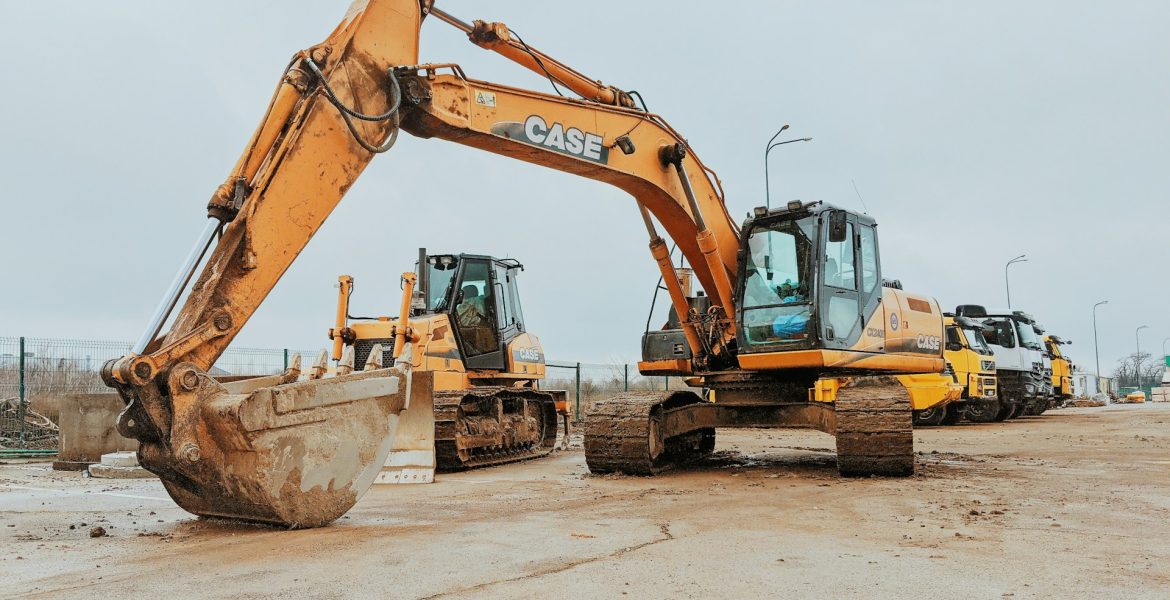
The hydraulic excavator that dominates jobsites today looks nothing like the steam shovel Otis built, but the fundamental principle is the same.
The question of who invented the excavator leads to Otis, but the machine we recognize today is the product of generations of refinement. Anyone asking who invented the excavator should also appreciate the engineers who transformed it from steam to hydraulic power.
Modern excavators use diesel engines to drive hydraulic pumps that pressurize fluid throughout the machine. That fluid powers cylinders on the boom, stick, and bucket, rotates the upper structure through a slew motor, and drives the tracks through final drive motors on each side.
The operator controls all of these functions from a climate controlled cab with joystick controls that would seem like science fiction to Otis.
Computerized engine management, load sensing hydraulics, GPS guided digging, telematics for remote monitoring, and automatic grade control have pushed excavator productivity to levels that early builders could never have imagined. Yet the core task remains unchanged. Dig earth. Move it somewhere else. Do it faster than anyone with a hand shovel.
Why This History Matters for Operators Today
Knowing who invented the excavator is more than trivia. It connects you to the engineering principles that still govern how your machine works. The answer to who invented the excavator also reveals why maintenance matters so much.
The hydraulic system that Poclain pioneered is the same system running through your machine today. When hydraulic fluid degrades, seals fail, or cylinders lose pressure, the machine loses the precision and power that make it useful. Understanding how hydraulic cylinders function helps you maintain the system that makes modern excavation possible.
The final drive that moves your tracks uses the same planetary gear reduction principle that early engineers developed to multiply torque from smaller power sources.
When those gears lose lubrication or seals let in contamination, the same type of failure that sidelined machines a century ago stops your excavator today. Knowing what causes drive motor failure ties directly back to the engineering challenges that builders have been solving since the steam era.
When a final drive does need replacing, Precision Final Drives carries aftermarket motors for a wide range of excavator brands. Every unit ships fully assembled and ready for installing your drive as a bolt on replacement, keeping the legacy of excavator innovation moving forward one machine at a time.
The answer to who invented the excavator starts with William Otis and continues through every operator who keeps these machines running today.

Frequently Asked Questions (FAQs)
1. Who Invented the First Excavator?
William Smith Otis, an American engineer from Massachusetts, invented the first steam powered mechanical excavator. He built it while working on a railroad construction project and received a patent for the design. His machine is recognized as the ancestor of all modern excavators.
2. What Did the First Excavator Look Like?
The first excavator was mounted on a railroad car and powered by a steam engine with a vertical boiler. It had a fixed mast, a swinging boom, and a dipper stick with a toothed bucket. The boom could swing approximately 180 degrees for digging and dumping.
3. When Did Hydraulic Excavators Replace Steam Shovels?
The transition happened gradually. Diesel powered shovels first replaced steam models, and then hydraulic excavators emerged in the mid twentieth century. The story of who invented the excavator spans this entire arc. By the time fully rotating hydraulic machines became widely available, cable operated shovels were pushed almost entirely out of the market.
4. Who Built the First Hydraulic Excavator?
The French company Poclain is credited with building one of the earliest successful hydraulic excavators. Their TU model was followed by the TY45, which became the first widely adopted fully rotating hydraulic excavator and sold over 30,000 units worldwide.
5. How Has the Excavator Changed Since It Was Invented?
The core function of digging and moving earth remains the same, but everything else has evolved. Modern excavators use hydraulic power instead of steam, feature 360 degree rotation, offer computerized controls, and include GPS guided digging systems.
Asking who invented the excavator highlights how far the technology has come from that first railroad mounted steam shovel.