
Every final drive gear inside your planetary assembly is machined to precise tolerances and hardened to withstand thousands of hours of heavy torque.
But gears do not last forever, and when they start to fail, the warning signs show up long before the machine stops moving. Operators who recognize those signals early save thousands in repair costs.
Operators who ignore them end up replacing entire final drive assemblies instead of catching the problem at a stage where less expensive repairs are still possible. If your machine makes unusual sounds during travel, feels sluggish on one side, or leaks oil behind the sprocket, the final drive gear system could be telling you something important.
This guide covers how the gears work inside the final drive, the trouble signs you should never ignore, what causes gear damage, and how to keep the system healthy.
How the Gears Work
The final drive gear system is built around a planetary arrangement. A central sun gear receives rotational input from the hydraulic travel motor.
Planet gears mounted on a carrier orbit around the sun gear inside a stationary ring gear. As the planet gears rotate, the carrier turns at a reduced speed with greatly multiplied torque. This torque passes to the sprocket that drives the track.
Most final drives use two or three stages of planetary reduction. Each stage compounds the speed reduction and torque multiplication. By the time the rotational energy reaches the sprocket, the output is slow and enormously powerful, which is exactly what a multi ton machine needs to crawl across rough terrain.
Every final drive gear in the system is hardened steel, precision machined to mesh smoothly with its mating gear. The contact surfaces between teeth transfer forces measured in thousands of pounds.
When those surfaces are clean, properly lubricated, and correctly aligned, the system runs quietly and efficiently for thousands of hours. When something goes wrong, the gears announce it. Understanding how excavator final drives use these planetary stages helps you appreciate why gear health matters so much.
Noise That Should Concern You
The first and most obvious sign of final drive gear trouble is noise. Healthy gears run with a low, consistent hum during travel.
A grinding noise indicates metal to metal contact past normal wear. Gear teeth that have lost their hardened surface layer grind instead of meshing smoothly, and the damage accelerates with every revolution.
A whining or howling sound that changes pitch with travel speed usually points to bearing wear that has allowed gears to shift out of alignment. Even small spacing changes alter the tooth contact pattern.
Clicking or knocking at regular intervals suggests a chipped tooth. Each time the damaged tooth engages, it produces a distinct impact. Continuing to operate with a chipped final drive gear sends debris through the housing and damages other components.
Vibration and Rough Travel
Vibration felt during travel is another signal that something inside the final drive gear system has changed. A healthy final drive produces smooth track movement. When gears wear unevenly or bearings develop play, the output becomes rough.
One sided vibration isolates the problem to a specific final drive. If both sides vibrate, check the final drives first but consider other drive train components as well. Rough travel combined with noise is a stronger indicator than either symptom alone.
Loss of Travel Power
When the final drive gear system is healthy, both tracks deliver equal torque and the machine travels straight. A gear problem on one side reduces torque output, causing the machine to pull during straight travel.
Sluggish response when starting from a stop can also indicate gear issues. Worn teeth with rounded contact surfaces transfer torque less efficiently. The motor works harder to move the same load.
Complete loss of drive on one side while the motor still runs points to catastrophic final drive gear failure. A stripped sun gear or shattered planet gear means the motor spins but no torque reaches the sprocket.
What Causes Gear Damage
The number one cause of final drive gear damage is contaminated lubricant. Gear oil protects the tooth surfaces by maintaining a thin film between meshing teeth. When dirt, sand, water, or metal particles contaminate the oil, that protective film breaks down.
Abrasive particles grind against gear surfaces every time the teeth engage, wearing through the hardened layer far faster than normal operation would.
Contamination typically enters through a failed face seal. When the floating seal leaks, external debris works its way into the planetary housing. The contaminated oil then accelerates wear on every final drive gear in the assembly. Knowing what leads to drive motor failure helps you trace gear damage back to its root cause.
Low oil level is the second major cause. When gear oil drops below the minimum required level, gears at the top of the rotation lose lubrication. Metal to metal contact generates heat, pitting, and scoring that cannot be reversed. Checking the oil level regularly is the single most effective way to protect the final drive gear system.
Overloading and sustained high speed travel under heavy resistance generate heat that breaks down gear oil. Degraded oil loses its ability to protect tooth surfaces, and the resulting wear progresses rapidly once the protective film is compromised.
Inspecting the Gear Oil
The gear oil is your best diagnostic tool for evaluating final drive gear health without disassembly. Rotate the final drive housing until the inspection plug sits at the three o’clock position. Remove the plug and inspect what comes out.
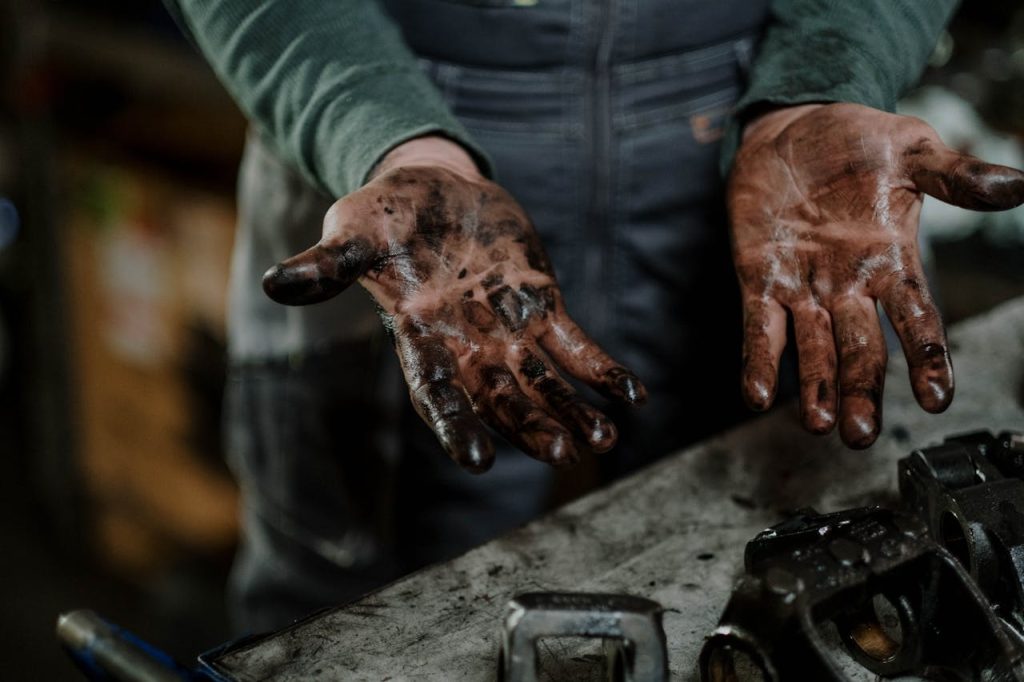
Clean oil with a golden or amber color indicates a healthy system. Dark oil suggests heat degradation or the beginning of wear particle accumulation. Milky or cloudy oil means water has entered the housing. Oil with visible metal flakes or a metallic sheen confirms that gear or bearing surfaces are breaking down.
If the oil shows contamination, drain it completely, flush the housing, and refill with fresh oil of the correct grade. Then monitor the condition over the next 50 to 100 hours. If contamination returns quickly, the face seal or an internal seal has failed and needs replacement before the final drive gear damage worsens.
Keeping the Gears Healthy
Protecting the final drive gear system starts with gear oil management. Change the oil at the intervals specified in your service manual. In harsh conditions with heavy dust, mud, or water exposure, shorten the interval.
Keep the undercarriage clean. Packed debris around the final drive housing traps moisture and heat against seals. Pressure washing after each shift removes material that accelerates seal failure. Understanding how hydraulic cylinders and other sealed components benefit from clean conditions reinforces the value of undercarriage hygiene across the entire machine.
Inspect for leaks during daily walkarounds. Oil behind the sprocket is the earliest visible sign of seal failure. Addressing it promptly prevents contamination from reaching the gears.
When gear damage has progressed beyond what fresh oil and new seals can address, Precision Final Drives carries aftermarket final drive motors for a wide range of brands, shipped fully assembled and ready for installing your drive as a bolt on replacement.
Staying alert to the warning signs protects every final drive gear in your machine and keeps your tracks turning reliably.
Frequently Asked Questions (FAQs)
1. What Does a Failing Final Drive Gear Sound Like?
A failing gear produces grinding, whining, or clicking sounds during travel. Grinding indicates metal to metal contact. Whining suggests bearing related misalignment. Clicking at regular intervals points to a chipped tooth on a specific final drive gear.
2. Can I Check Final Drive Gear Condition Without Disassembly?
Yes. Inspect the gear oil by pulling the three o’clock plug. Oil color and the presence of metal particles tell you a great deal about gear health. Noise, vibration, and travel behavior provide additional diagnostic information.
3. What Causes Final Drive Gears to Wear Prematurely?
Contaminated gear oil is the leading cause. Failed face seals allow dirt and water into the housing. Low oil levels, overheating, and overloading also contribute. Regular oil checks and undercarriage cleaning are the best preventive measures.
4. Can a Single Damaged Gear Be Replaced?
In some situations, yes. If only one planet gear or the sun gear is damaged and the housing and bearings are intact, individual gear replacement during a rebuild is possible. However, if multiple gears show wear, replacing the entire assembly is more reliable.
5. How Often Should I Check the Final Drive Gear Oil?
Check the gear oil level and condition every 100 to 250 hours depending on operating conditions. Change the oil at the manufacturer’s recommended intervals. In severe environments, shorten the change interval to protect the final drive gear system from accelerated wear.